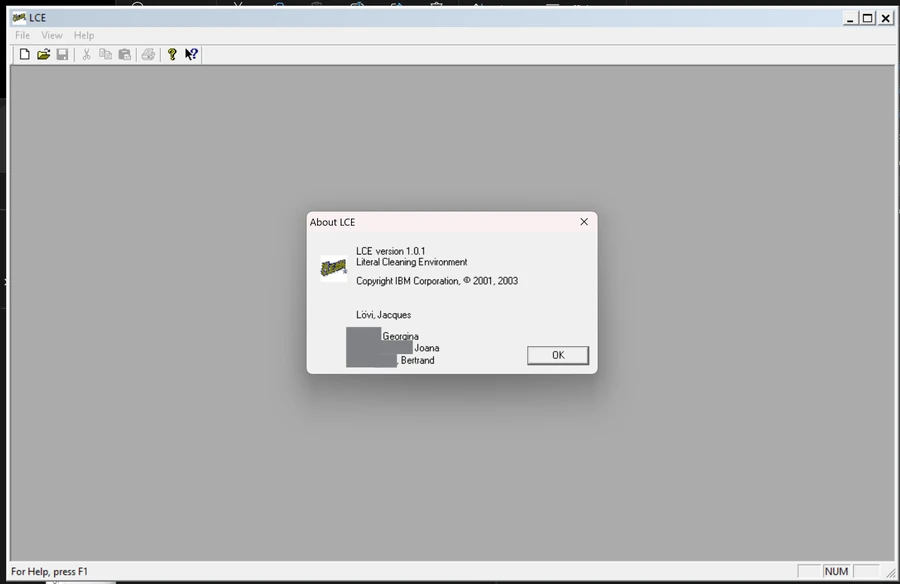
Seeing a colleague manually replace literals with constants, without safeguards, prompted me to propose a tool to make the process safer. That initiative became LCE, the Literal Cleaning Environment, developed with a small team at IBM for critical interbank software. Tens of thousands of literals were involved.
How it worked
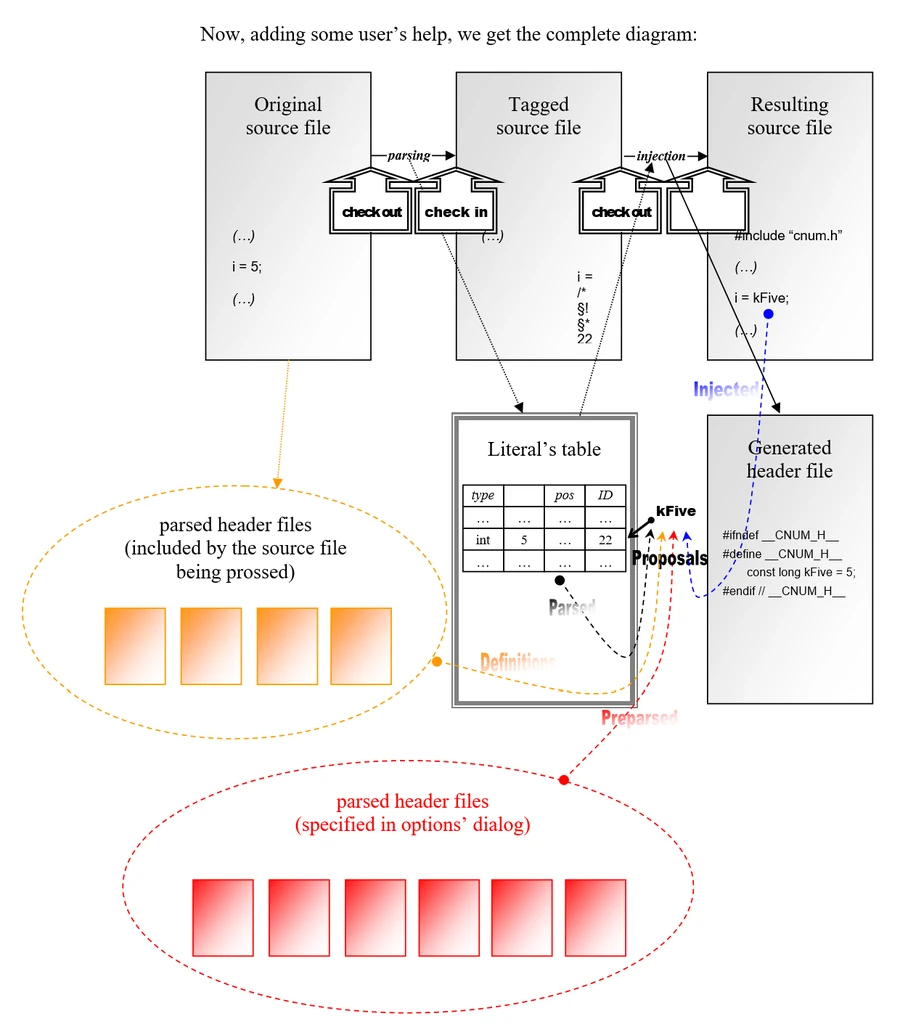
LCE analysed source files and marked literal occurrences. Developers chose meaningful symbolic names; the tool applied the replacements and generated the corresponding headers. Separating analysis from replacement allowed other developers to continue working between the two stages.
The workflow. From source analysis and naming decisions to transformed code and generated headers.
Select any image to enlarge it. These original captures include masked source code and personal details.
From analysis to transformation
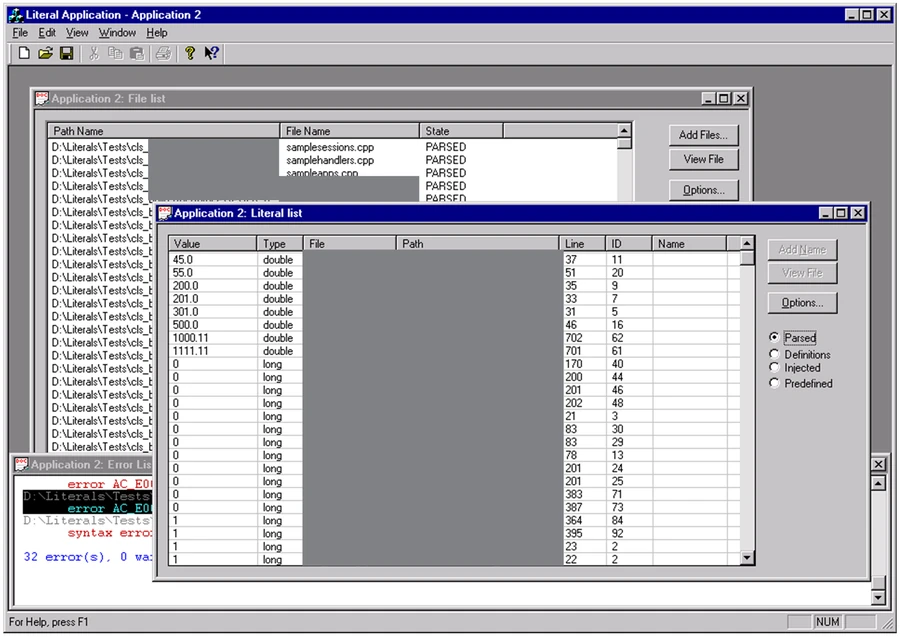
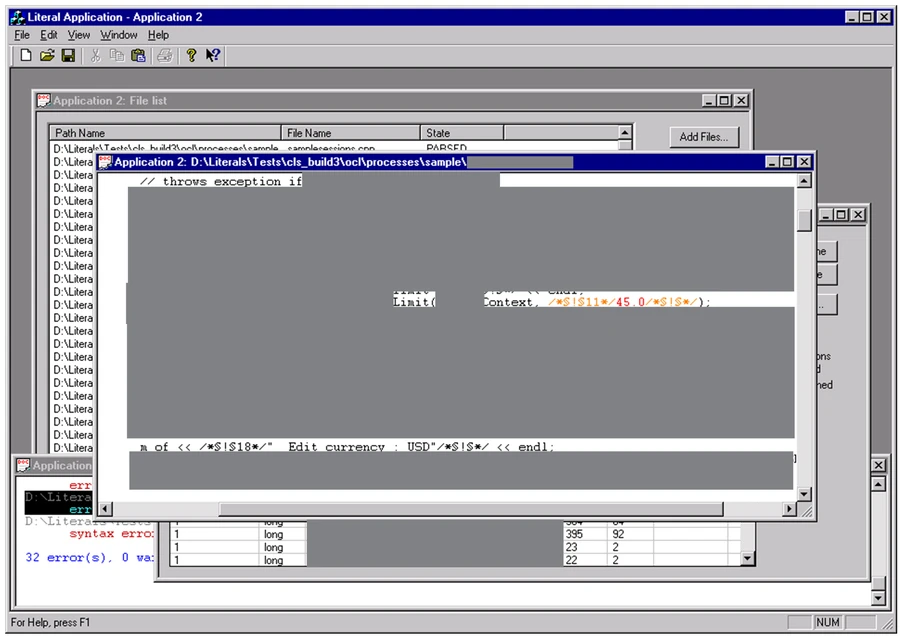
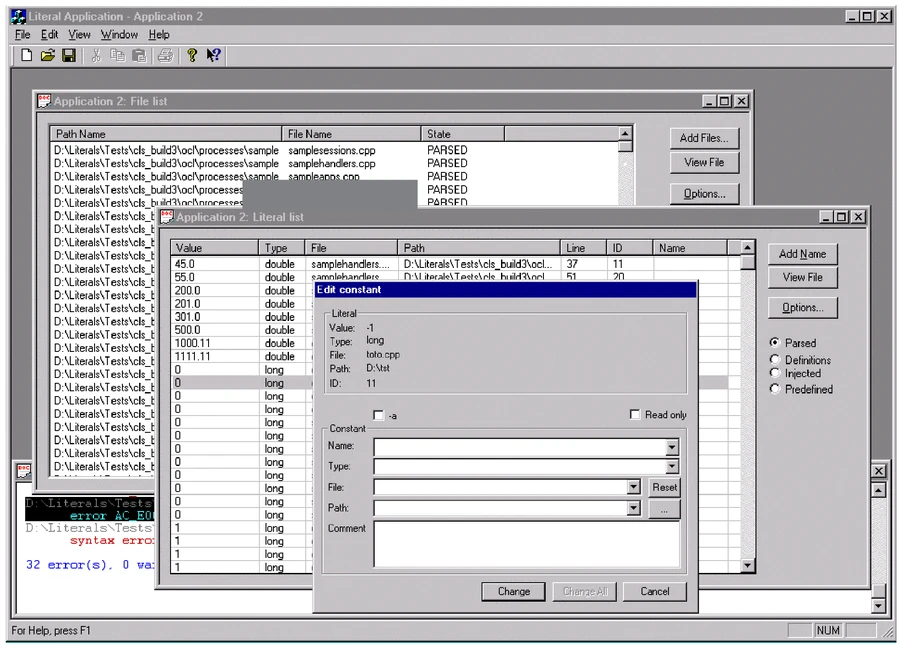
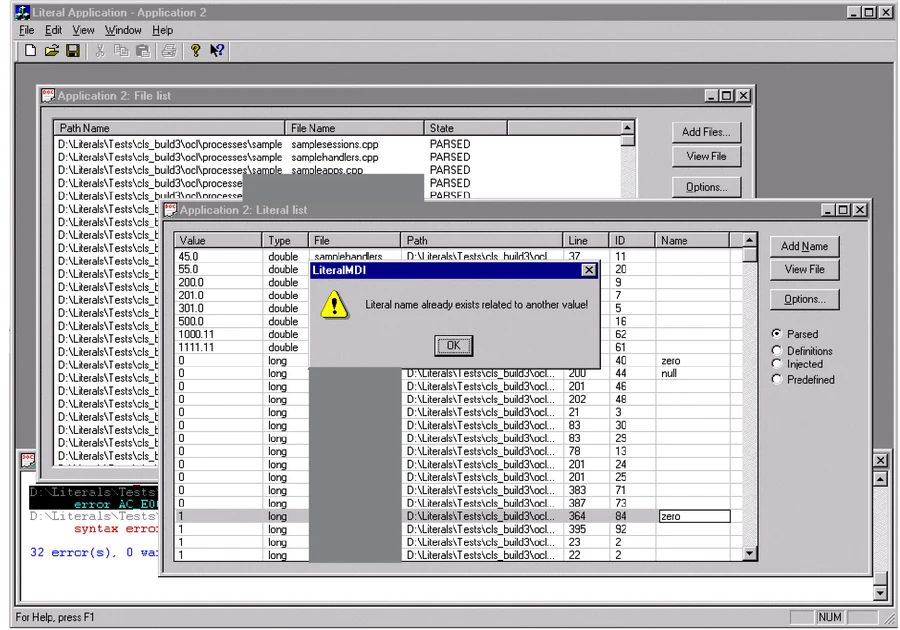
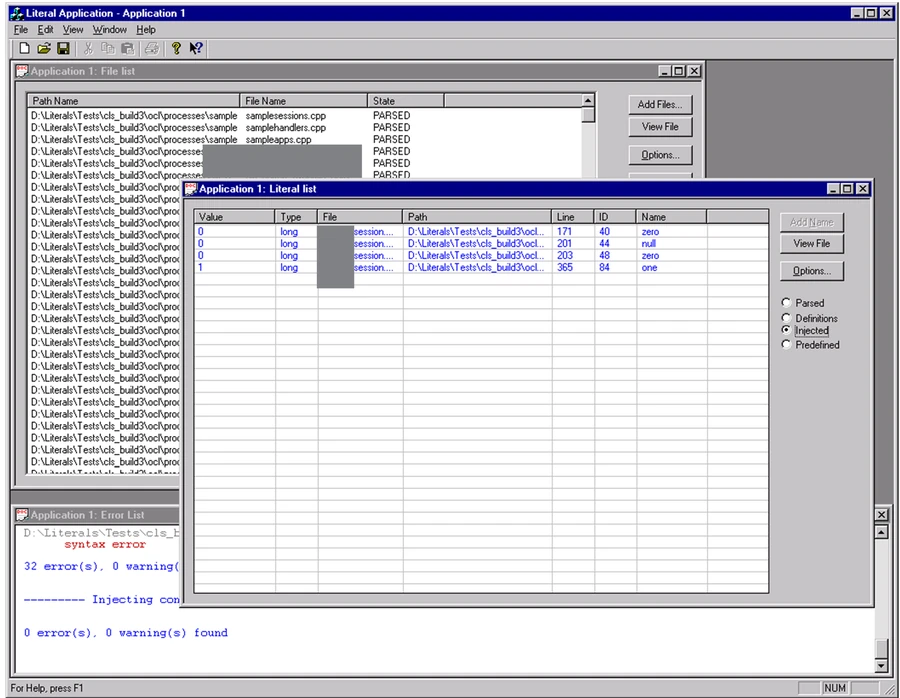
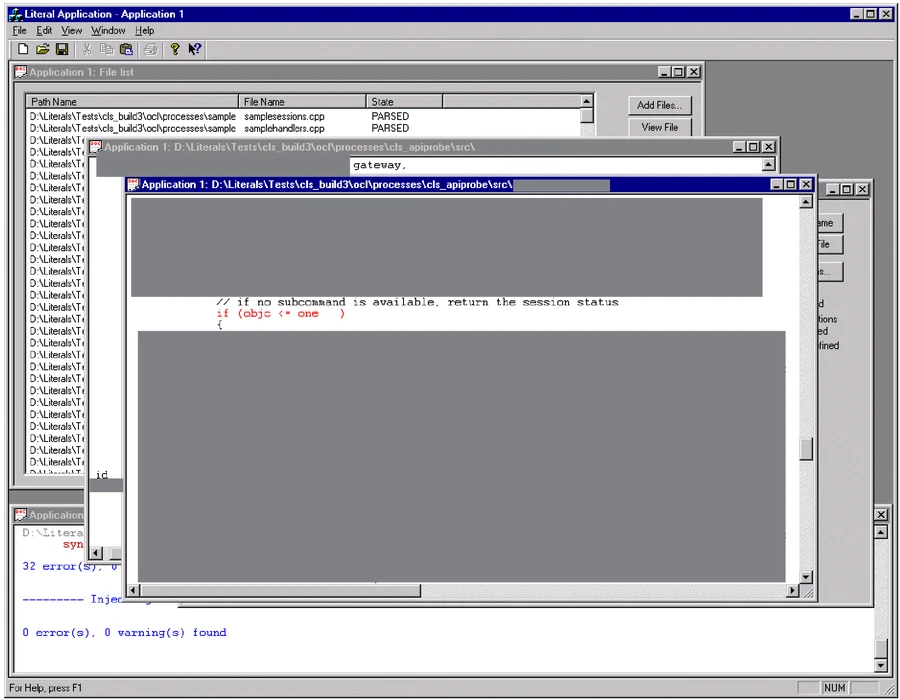
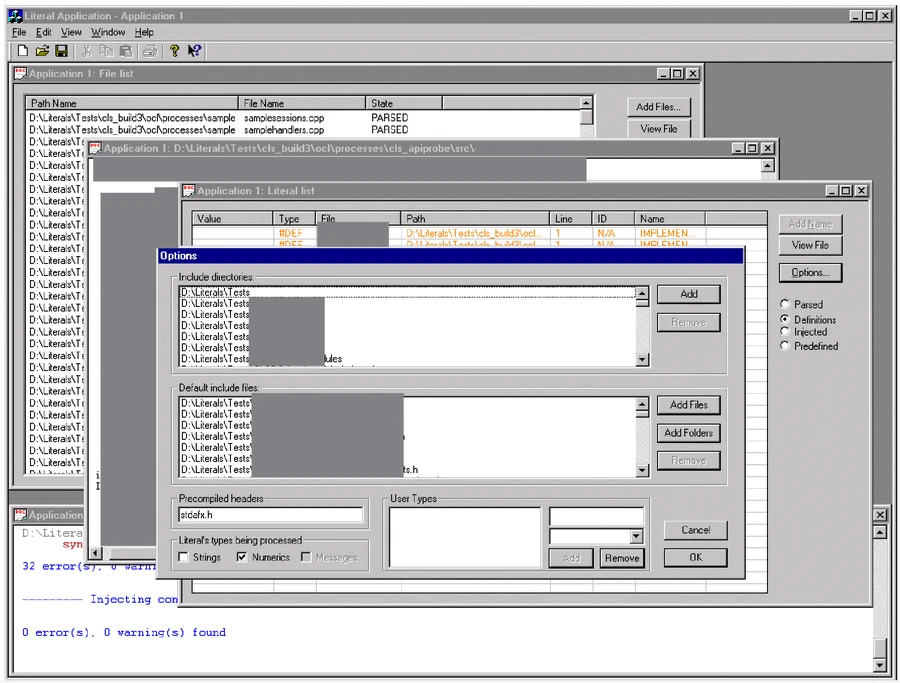
Analysis. Identifying literals, their types and their locations in the source.Source markers. Tracking literal occurrences even when surrounding code is edited or moved, and checking that their values have not changed before applying replacements.Choosing a constant. Specifying the symbolic name, type, destination file and comment.Naming and safeguards. Different names can distinguish uses of the same value. A check prevents assigning an existing name to a different value.Injection results. Reviewing the replacements and their source locations. The injection step reports no errors or warnings.Transformed source. Inspecting the code with the chosen symbolic names and temporary markers removed.
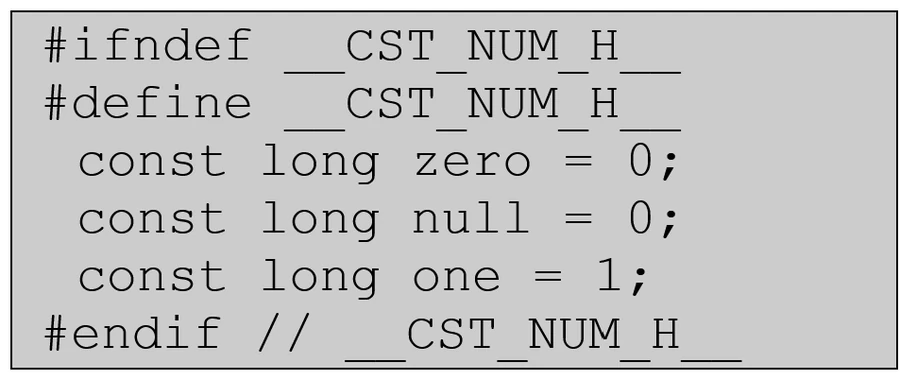
Generated header. Collecting the constant definitions, including distinct names for different uses of the same value.Configuration. Setting include paths, headers, user-defined types and the categories of literals to process.
A method around the tool
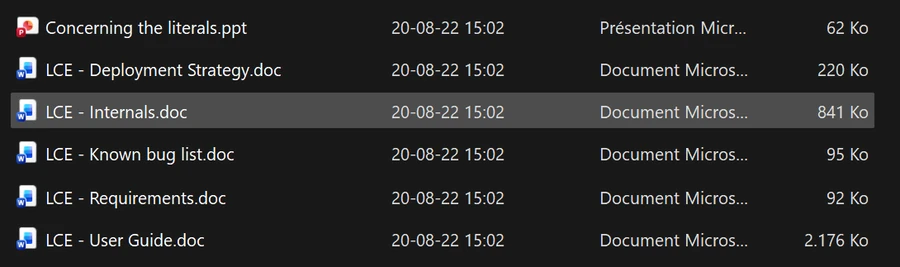
The approach also defined how the team would work: module ownership, reviews by developers familiar with other modules, and three code reviews during the cleanup. Documentation covered requirements, internals, deployment, user guidance and known bugs.
Documentation. The documentation set included known limitations alongside instructions for using, deploying and maintaining the tool.